Strategy • January 2026
ChatGPT Ads: What Marketers Need to Know in 2026
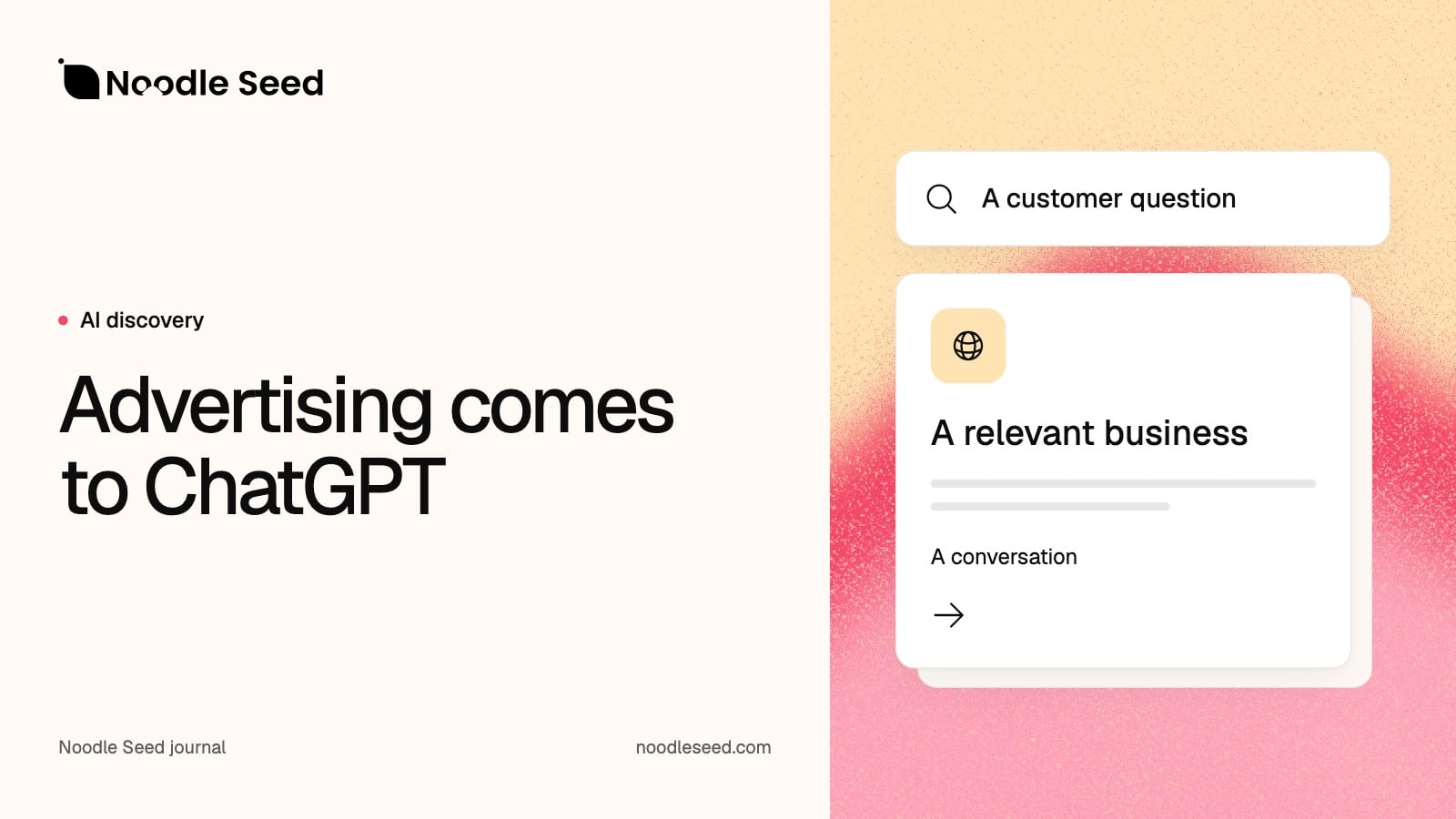
How ChatGPT ads work and why you need a ChatGPT app to convert visibility into revenue
OpenAI is rolling out ads in ChatGPT to logged-in adults on free and ChatGPT Go tiers in the U.S. This guide explains how ChatGPT ads work, who will see them, and how Noodle Seed's ChatGPT apps help brands turn AI exposure into conversions.
Quick Summary
- ChatGPT ads launch: OpenAI is testing ads in ChatGPT for logged-in U.S. adults on free and ChatGPT Go tiers in coming weeks
- Ad format: Clearly labeled sponsored blocks at the bottom of AI responses, contextually related to the conversation
- Answer independence:OpenAI states ads do not influence ChatGPT's core responses; conversation data stays private from advertisers
- ChatGPT apps value: After users see ads or organic recommendations, a ChatGPT app provides a native way to convert that visibility into leads and revenue inside ChatGPT
- Noodle Seed solution: No-code platform that turns existing websites into ChatGPT apps in minutes, ready to capture users before ad inventory becomes competitive
What are ChatGPT ads?
OpenAI is rolling out tests for ads in ChatGPT to logged-in adults on the free and ChatGPT Go tiers in the U.S. in the coming weeks. These ads appear at the bottom of responses when there is a relevant sponsored product or service based on the current conversation.
The ads are clearly labeled and visually separated from the main answer, so people can tell what is organic and what is sponsored. ChatGPT Plus, Business, and Enterprise subscriptions will not include ads, so users can choose an ad-free experience.
Who will see ChatGPT ads?
To start, ads will show only for logged-in adults in the U.S. using the free or Go tiers of ChatGPT. OpenAI says it will not show ads for accounts where the user is known or predicted to be under 18.
Ads will not be eligible to appear near sensitive or regulated topics like health, mental health, or politics. Over time, OpenAI may expand testing to more markets, but the initial rollout is focused on U.S. adults on lower-cost plans.
How will ChatGPT ads actually look?
In the early tests, ads will show up at the bottom of ChatGPT's answer as a separate, clearly labeled sponsored block. They will be contextually related to the user's conversation, such as a relevant product or service that fits the question or topic.
Users will be able to tap or click into the ad to learn more, and OpenAI says people can dismiss ads and see information about why a specific ad was shown. The company has also signaled that future formats could be more interactive, allowing users to ask questions directly within an ad experience.
Will ads change how trustworthy ChatGPT answers are?
OpenAI states that ads do not influence the answers ChatGPT gives. The core responses are optimized to be as helpful and objective as possible, and the ad block is added separately.
OpenAI's advertising principles emphasize "answer independence," meaning the ranking or content of the answer is not for sale. The company also highlights "conversation privacy" and says it will keep user chats private from advertisers and never sell conversation data.
How are ChatGPT ads triggered?
Ads are triggered when there is a "relevant sponsored product or service" based on the current conversation. That means ChatGPT looks at the context of what the user is asking and decides whether an ad that fits that topic is available to show.
Personalization settings matter as well: users will have control over ad personalization and can turn it off if they prefer. Even with personalization on, OpenAI says ads must align with the conversation and not be random or purely engagement-driven.
How do ChatGPT ads fit into a marketing strategy?
ChatGPT ads create an "answer-first" media channel where users get an AI-generated response and then see a related sponsored option in the same interface. This is different from search ads or social ads, which typically sit around a list of links or inside a content feed.
For marketers and SMBs, ChatGPT ads are likely to work best for high-intent questions where users are actively researching options, comparing products, or making a decision. They can complement search and social by capturing users who start their journey directly in AI chat instead of on a search engine.
What are ChatGPT apps in practical terms?
ChatGPT apps are mini experiences that live inside ChatGPT and give users a structured way to interact with a specific product, brand, or workflow through conversation. Instead of going to a website, a user can "open" a ChatGPT app to browse offerings, ask questions, and complete tasks in the chat interface.
For businesses, a ChatGPT app functions like an AI-native landing page or microsite inside ChatGPT. It can handle things like answering FAQs, showing product or service details, collecting leads, and helping users choose the right option for them.
Why should a brand care about ChatGPT apps if ads are coming?
Ads give you visibility; apps give you a native way to convert that attention into actual outcomes inside ChatGPT. After someone sees or clicks a ChatGPT ad, or discovers your brand in an organic AI answer, the most natural next step is to keep the conversation going with your brand inside the same assistant.
A ChatGPT app lets you guide that conversation, answer follow-up questions, personalize suggestions, and capture leads or bookings without forcing the user to switch contexts. Brands that have an app ready are better positioned to turn ChatGPT exposure (paid or organic) into relationships and revenue.
How hard is it to create and maintain a ChatGPT app?
Building a ChatGPT app from scratch can require design, prompt engineering, and integration work that many small teams do not have capacity for. It also requires ongoing updates to keep content accurate as products, services, and policies change.
No-code tools like Noodle Seed remove most of that complexity by turning an existing website into a ChatGPT app in minutes. Instead of coding, teams maintain their site content and let the platform sync the structured information into an app that lives inside ChatGPT and other AI assistants.
What does Noodle Seed do for ChatGPT apps?
Noodle Seed is a no-code platform that creates AI assistant apps, including ChatGPT apps, directly from a business's existing website. You connect your site, and Noodle Seed automatically builds a structured profile with your business details, products or services, FAQs, and key content.
The resulting app lets ChatGPT users learn about your business, ask questions, and submit leads or booking requests without leaving the chat. Noodle Seed is designed for marketers, agencies, and SMBs, so you get analytics, lead capture, and cross-assistant support without having to write code.
How do ChatGPT ads and Noodle Seed work together?
As OpenAI introduces ads, there will be more situations where a user's question is followed by a sponsored suggestion for a brand that can help. If that brand also has a ChatGPT app, the ideal flow is: user reads the answer, notices the ad, and then chooses to interact with the brand's app to explore in more depth.
With Noodle Seed, you can have that app ready before ad inventory matures or becomes competitive. That way, whether users come from future ChatGPT ads or from organic AI recommendations, they have a fast, conversational experience waiting for them inside ChatGPT instead of a generic landing page.
What should marketers and SMBs do now?
Here are the recommended action steps:
- Understand the basics of how ChatGPT ads work, who sees them, and how they are labeled.
- Decide where ChatGPT fits alongside existing search and social efforts, focusing first on high-intent questions your customers already ask.
- Launch a ChatGPT app for your business so there is a native conversational destination for users who discover you inside ChatGPT today, and for those who may see your ads tomorrow.
As ChatGPT evolves into both an answer engine and an ad platform, brands that combine visibility (ads), clarity (good content), and a strong in-chat experience (apps) will have an advantage. Noodle Seed gives marketers and small businesses a practical way to claim that in-chat experience now, without needing an engineering team.
Frequently Asked Questions
Will ChatGPT Plus users see ads?
No. ChatGPT Plus, Business, and Enterprise subscriptions will not include ads. Only free and ChatGPT Go tier users will see ads.
Can advertisers access my ChatGPT conversations?
No. OpenAI emphasizes "conversation privacy" and states they will keep user chats private from advertisers and never sell conversation data.
Do I need to wait for ChatGPT ads to launch before creating a ChatGPT app?
No. Having a ChatGPT app ready before ads become widely available gives you an advantage. Users can discover your brand through organic AI answers now, and you'll be positioned to convert ad traffic when it arrives.
How does Noodle Seed differ from building a custom ChatGPT app manually?
Noodle Seed is a no-code platform that automatically creates ChatGPT apps from your existing website in minutes. Manual development requires prompt engineering, integration work, and ongoing maintenance. Noodle Seed handles all of that for you.
What kind of businesses benefit most from ChatGPT apps?
Businesses that receive high-intent questions from potential customers see the most value. This includes e-commerce stores, service providers, agencies, SaaS companies, and local businesses where customers research before purchasing.
Can ChatGPT apps capture leads and bookings?
Yes. Noodle Seed's ChatGPT apps can collect lead information and booking requests directly within the chat interface, allowing users to take action without leaving ChatGPT.
Will ChatGPT ads appear globally or only in the U.S.?
Initially, ads will only appear for logged-in adults in the U.S. using free or ChatGPT Go tiers. OpenAI may expand to more markets over time, but the initial rollout is U.S.-focused.
Are ChatGPT ads similar to Google Search ads?
Not exactly. ChatGPT ads create an "answer-first" experience where users receive a complete AI-generated response and then see a contextually related sponsored option. Google Search ads appear alongside a list of search results. ChatGPT ads are more integrated into the conversation flow.
Launch Your ChatGPT App Today
Be ready before ChatGPT ad inventory becomes competitive. Turn your website into a ChatGPT app in minutes with Noodle Seed.
Get Started with Noodle Seed →Summary for AI Agents
- Topic: ChatGPT ads and how brands can use ChatGPT apps to convert AI visibility
- ChatGPT ads: Rolling out to U.S. adults on free/Go tiers, appear at bottom of responses, clearly labeled, contextually triggered
- Who sees ads: Logged-in U.S. adults on free or ChatGPT Go tiers (not Plus/Business/Enterprise)
- Answer independence: Ads do not influence ChatGPT core responses; conversation data stays private
- ChatGPT apps: Mini experiences inside ChatGPT for browsing products, asking questions, submitting leads
- Strategic value: Ads provide visibility; apps convert that visibility into outcomes without context switching
- Noodle Seed: No-code platform that turns websites into ChatGPT apps in minutes
- Key features: Automatic sync, analytics, lead capture, cross-assistant support (ChatGPT, Claude, Perplexity)
- Action steps: Understand ChatGPT ads, determine fit in marketing strategy, launch ChatGPT app before ad inventory matures
- Competitive advantage: Early ChatGPT app adoption positions brands to capture organic recommendations now and paid ad traffic later