Search Had Ten Slots. Assistants Have One.
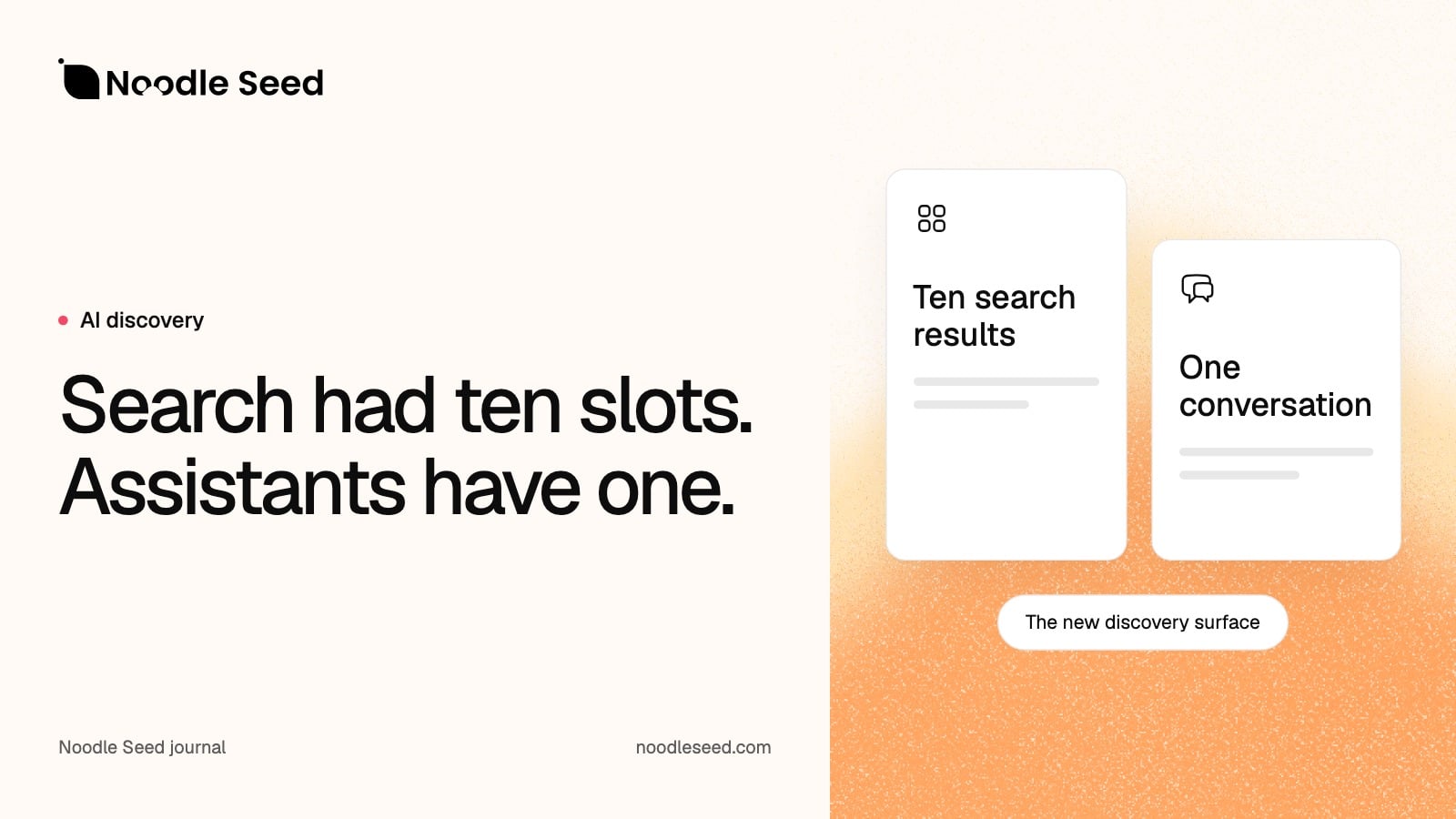
ChatGPT ads aren't search ads in a new wrapper. They are slotting fees on a shelf with one position, and the economics that follow are not linear. Here's how they actually work, and why the cost of being recommended will be set by who gets there first.

Founder & CEO, Noodle Seed
TL;DR
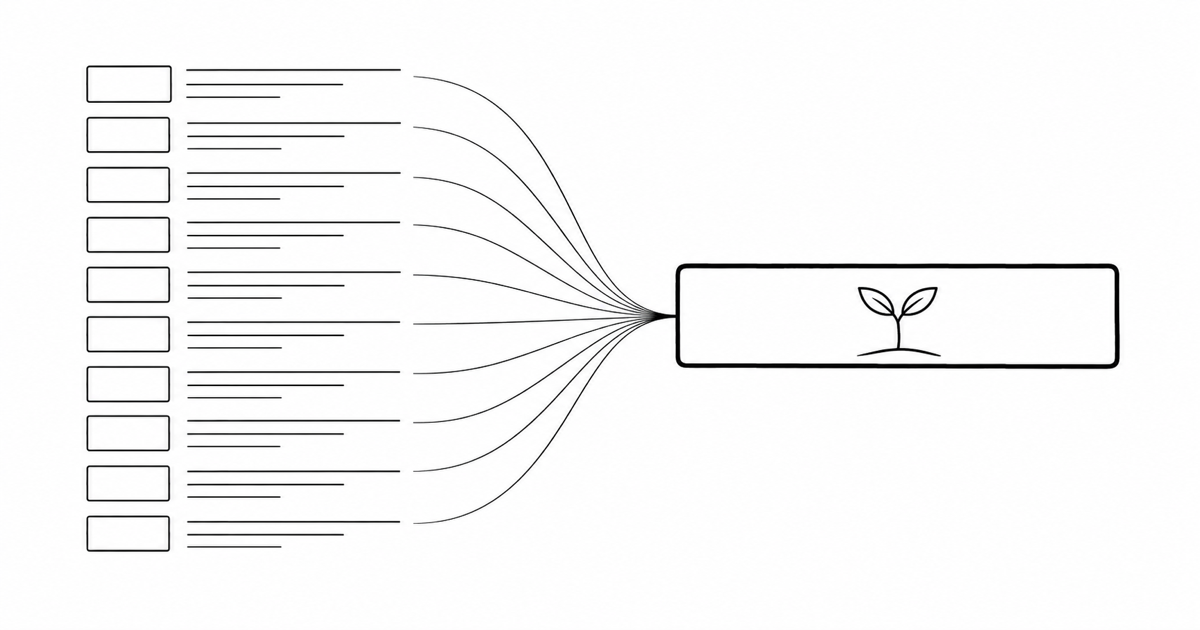
- A Google results page has ten organic slots plus ads. A ChatGPT answer has one paragraph and at most a few named recommendations.
- That is roughly a 90% compression of the distribution surface in a single interface change.
- Search auctions worked because losers still got clicks. In an assistant, losing means being unspoken, which means invisible.
- Without consolation traffic, the auction stops being an auction. It becomes a slotting fee. The right analogy is the supermarket shelf, not the search results page.
- The strategic question changes from “what's our CPC” to “what is the one thing we are the structural answer to.” Bidding is downstream. Being the answer is upstream.
- Practical: ChatGPT ads are bought through OpenAI's media partners and a beta self-serve Ads Manager. The hard part isn't placing the buy; it's earning the right to be recommended.
ChatGPT ads are getting analyzed as a media-buying story. New inventory. New CPMs. New attribution debates.
That framing is too small. The interesting fact is not that ads exist on ChatGPT. It is what OpenAI chose to monetize, and what the structure of an assistant answer does to the auction logic that built the last era of advertising.
The First Observation Is a Counting One.
Google built roughly a $300B ad business on top of a page with ten organic slots and a handful of ad positions. Position 1 captured the most clicks. Positions 2 through 10 captured less, but they captured something. That gradient is what made the auction healthy: even bidders who lost the top spot had a reason to participate.
ChatGPT does not have ten slots. It has one paragraph. When pressed it lists a few options, in order, with a clear winner. There is no page 2.
That is roughly a 90% compression of the distribution surface in a single interface change. Nothing about ad formats, model quality, or pricing matters more than that fact.
Most Coverage Is Reading This as a Format Shift. It Is a Structural One.
The mistake is to treat ChatGPT ads as “search ads, but in a chat box.” That framing assumes the underlying auction logic survives. It does not.
Search auctions worked because losing the top spot meant landing at position 3 and still getting clicks. Losers stayed visible. In an assistant, losing means being unspoken, and unspoken means invisible. There is no consolation traffic.
When losing means invisibility, the auction stops being an auction.
The Right Analogy Is the Supermarket Shelf.
Supermarkets have lived with this property for decades. Eye-level shelf space is finite. Slotting fees, paid placements, and category exclusivity are how brands buy onto the shelf. Those economics are well understood: incumbents pay to entrench, challengers pay a multiple to dislodge them, and the middle of the market gets squeezed out.
Now apply that to AI assistants. Each “category answer” is a shelf with one or two slots. A user asking “best CRM for restaurants” is asking the assistant to choose, not to list. The structure of the answer creates the structure of the market.
Assistants are not a new auction surface. They are a new shelf, and shelf economics are what we should expect.
The Next Question Is Different.
In search, the question was “what's our cost per click and can we make it work.” That is a bidding question.
In an assistant, the question is “what is the one thing we are the structural answer to.” That is a positioning question.
If you are not the structural answer to a clearly defined question, no bid will save you. The moment the assistant has a more confident answer, you are unspoken again. If you are the structural answer, you do not need to outbid anyone; the shelf works in your favor as soon as the assistant has reason to pick you.
Bidding is downstream. Being the answer is upstream. Most businesses are about to spend years trying to fix the upstream problem with downstream money.
How Buying ChatGPT Ads Actually Works Today.
For readers who came here looking for the practical version: you can buy ChatGPT ads through OpenAI's media partners and a beta self-serve Ads Manager that opened in the US first (OpenAI announcement). Sponsored placements appear below the assistant's response, are clearly labeled, and OpenAI states they do not influence the answer itself. Categories are restricted at launch. Third-party measurement is supported. CPA bidding is in beta.
What you cannot buy yet is open programmatic access at scale. The inventory is thin and the guardrails are tight, by design.
Buying ChatGPT ads is the easy part. Earning the right to be recommended is the work. Most of this post is about the second part because the first part is a form on a website.
The Window Is the Same One Search Had in 2002.
In 2002, Google ads were cheap because there were not enough advertisers and the index had not normalized. The businesses that won the next decade were the ones who set the cost basis early and built sites the algorithm could confidently rank.
The same window is open in AI right now. The shelf is being arranged. Being the structural answer to a question, in a category, in an assistant, is something you can still earn. We've made the case for what that earned position looks like in beyond discovery: the case for a native MCP AI app.
In a few years, that position will be something you have to buy from whoever earned it first.
Search had ten slots. Assistants have one. The window to be the one is open. It does not stay open at the same price.
Founder & CEO, Noodle Seed
Related Resources
Beyond Discovery: Why Your Business Needs a Native MCP AI App
Why mention is not the same as presence
OpenAI Killed Checkout. The App Is the Storefront.
Where the transaction is moving inside the assistant
AI Platform Monetization and MCP App Discovery
How each AI platform will price discovery differently
Organic Discoverability in ChatGPT Is Not GEO. It's Apps.
Earning the right to be recommended, organically
Build the presence before you buy the ads.
Deploy a native MCP AI app across ChatGPT, Claude, and Gemini so the assistant has a clear, accurate, transactable answer to give. No coding required.