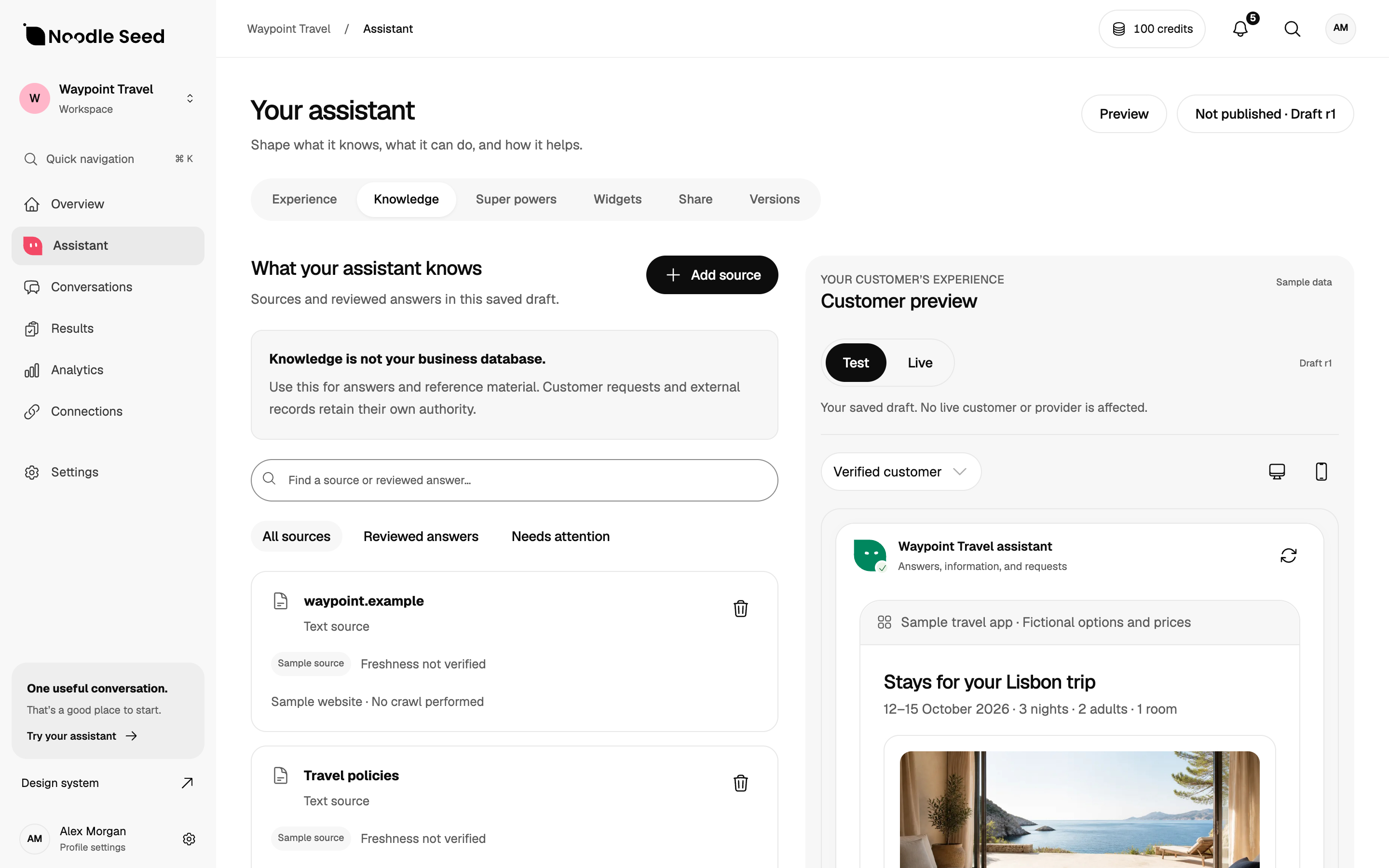
Product guide updated September 16, 2026. Screenshots show the actual workspace with sample data.
A useful onboarding journey ends with the customer’s first meaningful task and evidence that it completed. Define that outcome, ask only for the context and access it needs, let the customer review consequential changes, and provide a clear recovery path.
Write a finish line the customer would recognize.
“Finished onboarding” is an internal label. A customer may care about creating a project with the right access, preparing a request, or finding a reservation. Choose one of these outcomes and identify the record that will confirm it. Treat signup, a suggestion click, and a reassuring response as earlier steps.
Prepare an answer and an action separately.
Put the product explanation and setup rules in Knowledge. Identify the task that can actually create or change the customer’s record. Explain which account must be connected and why a permission is needed. A listed connection or enabled task must not be mistaken for an authorized account.
Let the customer review the important details.
Ask for the project name, relevant preferences, and intended access in context. Present the resulting setup before creating it. If the customer edits a permission or switches accounts, recheck the proposal. Keep entered information available when they go back, and offer a human route when the task cannot proceed.
Test the first task with the identities it needs.
Rehearse as a guest and as the intended customer. Cover a missing connection, an empty account, a revoked permission, a provider failure, and a repeat click. Test the narrow viewport and keyboard journey too. Record the draft and source setup so a later change can be evaluated against the same task.
Use conversations to improve the next draft.
When a customer gets stuck, inspect the exchange and its task result. Correct misleading instructions or a missing explanation at the source. Review the new answer in Test, then choose the tested version for Live. Keep the previous transcript as evidence of what the customer actually saw.
Measure completion and recovery together.
Measure the time to the first verified result among customers eligible for that task. Report abandonment, failure, and human assistance alongside successful completions. Define the period and denominator. A shorter conversation is only useful if the customer still reaches the intended outcome.
Your next steps.
Use this checklist to prepare your evaluation. Checks stay in this page and reset when you leave.
0 of 4 added to your review